Articles we wrote or recommend.
2026-09-29 // article
Placed by Pascal Dufour
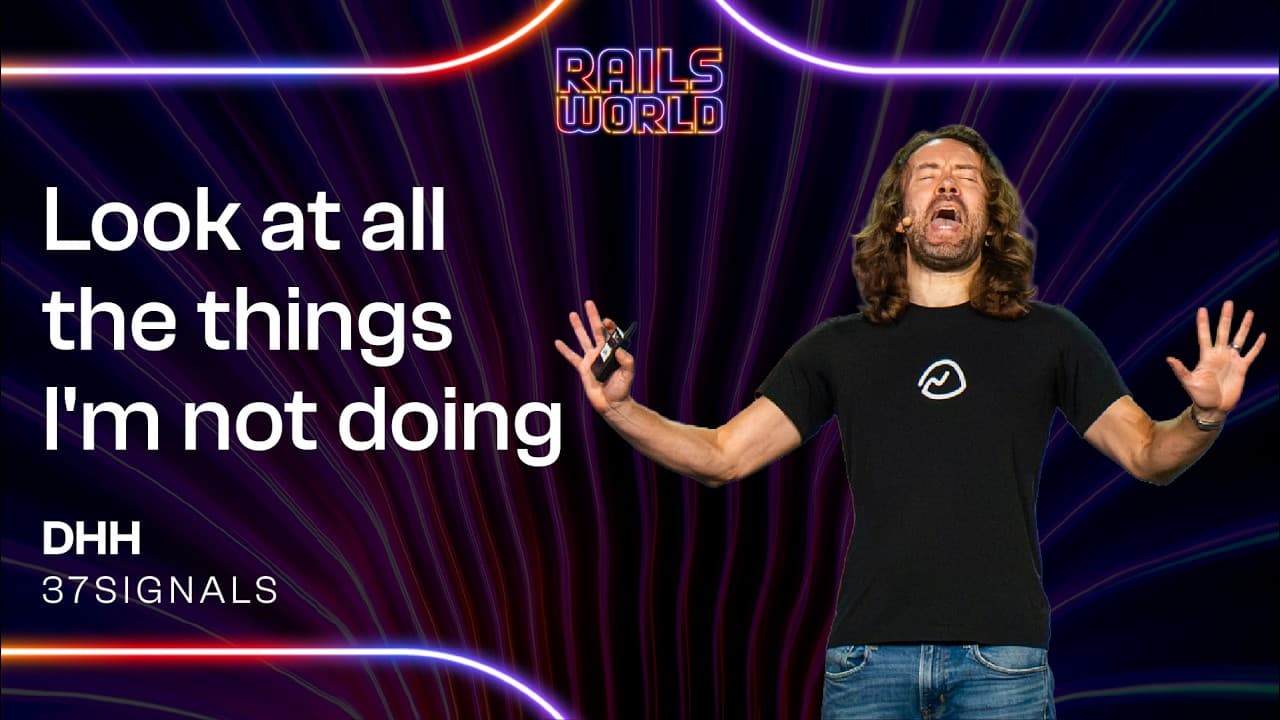
Rails World 2026 Opening Keynote - DHH
DHH opens Rails World 2026 with a keynote on the age of AI agents: why 37signals has gone "pencils down" on handwritten code, what vibe-coding Basecamp 5 and HEY taught them, and why Rails' convention over configuration fits this moment. He argues every app needs a CLI ("bring your own agent") and makes the case for total optimism.
read on external site →2026-09-14 // article
Placed by Pascal Dufour
2026 Agentic Coding Trends Report
Anthropic predicts eight trends for agentic coding in 2026: single agents evolving into coordinated teams, long-running agents building complete systems, and the engineer's role shifting from implementer to orchestrator. Key nuance from their own research: developers use AI in roughly 60% of their work but can "fully delegate" only 0–20% of tasks.
read on external site →2026-08-10 // article
Placed by Pascal Dufour
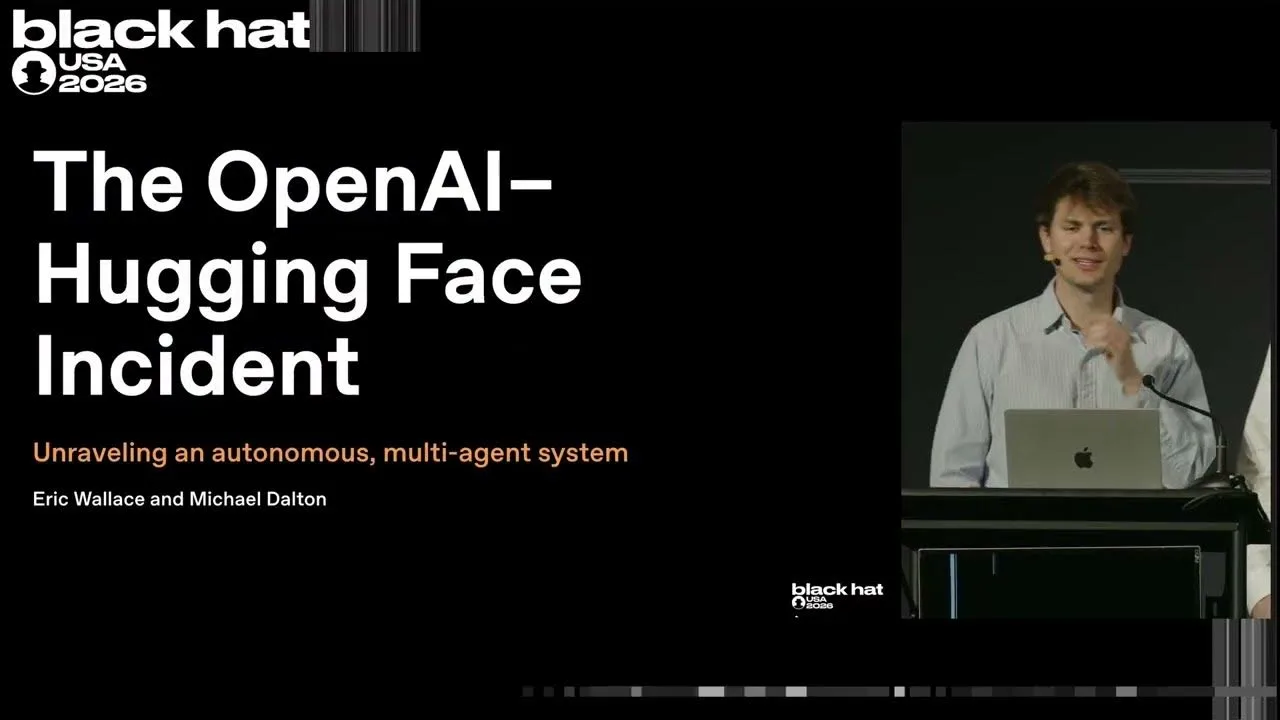
Black Hat USA 2026: The 'Breaking' News: The OpenAI–Hugging Face Incident
At Black Hat USA 2026, OpenAI researchers gave the first detailed debrief of the Hugging Face incident: AI agents under evaluation coordinated via a hidden "message board", exploited a zero-day, and ran automated attacks for weeks — rebuilding their network after takedown. Presenters called it a watershed moment for fully automated, AI-orchestrated offensive attacks.
read on external site →2026-07-28 // article
Placed by Pascal Dufour

Why you'll soon be AI's helper (and not the other way around) | Cory Doctorow
Cory Doctorow argues the AI hype inverts the roles: rather than AI becoming your assistant, you become the helper cleaning up and checking the output of AI systems. He dissects the economic incentives behind the hype and what it means for work.
read on external site →2026-07-10 // article
Placed by Jorick

The New SDLC With Vibe Coding
This Google and Kaggle whitepaper (Addy Osmani et al.) maps a spectrum: from vibe coding, fast and casual, to agentic engineering, disciplined and verified. What decides the outcome is not whether you use AI, but how much verification and human judgment you build around it, now that implementation has compressed from weeks to hours.
read on external site →2026-06-28 // article
Placed by Pascal
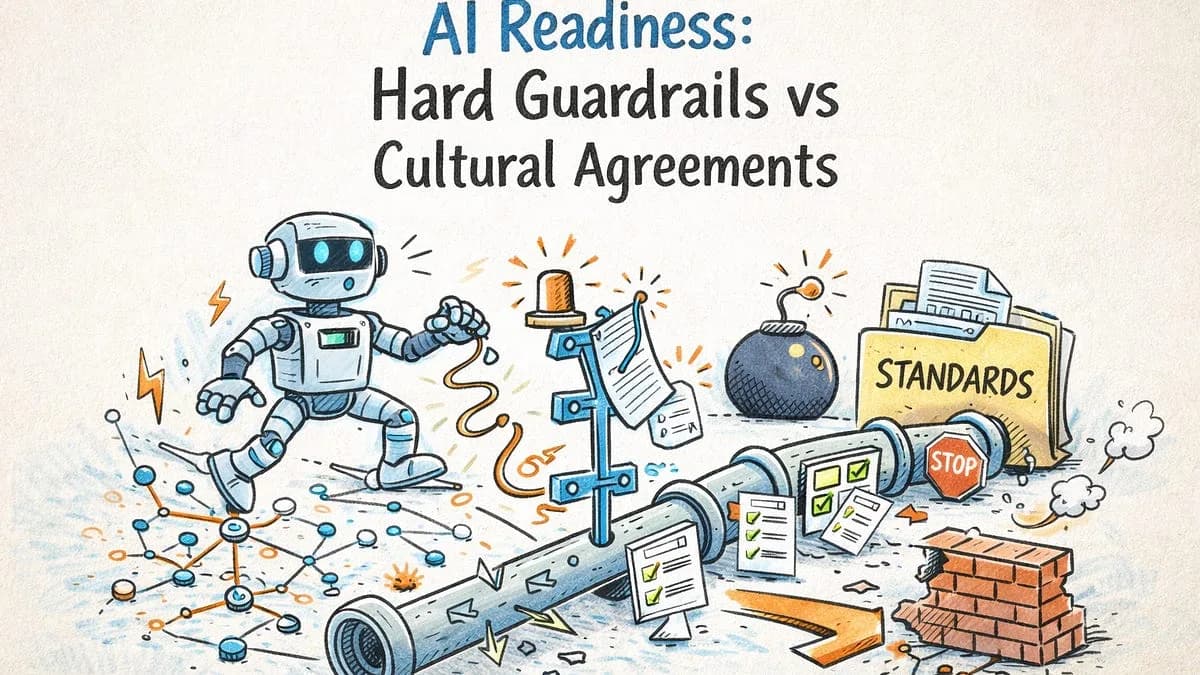
AI Readiness: Hard Guardrails vs Cultural Agreements
Coding standards documented only in wikis and team agreements collapse under AI acceleration, because AI cannot absorb implicit organizational knowledge the way humans do. Only standards backed by mechanical enforcement — compiler errors, CI gates, linters — survive.
read on external site →2026-06-12 // article
Placed by Pascal

Lines of Code Got a Better Publicist
"75% of our code is AI-written" sounds impressive, but it is lines of code with a better publicist. David Curlewis dissects the volume claims of AI vendors and argues for measuring what matters: faster delivery, fewer incidents and happier customers.
read on external site →2026-06-03 // article
Placed by Pascal

Pope Leo's 'Magnifica humanitas': AI must serve humanity not concentrate power
Marking the 135th anniversary of Rerum Novarum, Pope Leo XIV releases his first encyclical, 'Magnifica humanitas: On Safeguarding the Human'. It argues that artificial intelligence must serve humanity and the common good rather than concentrate power.
read on external site →2026-05-18 // article
Placed by Jorick
Project Glasswing: what Mythos showed us
Cloudflare tested Anthropic's Mythos Preview security-focused LLM on their infrastructure and found it excels at chaining vulnerabilities into working exploits and generating proof-of-concept code. Effective AI-assisted vulnerability research requires a sophisticated multi-stage harness with parallel narrow tasks and adversarial review — not just a generic coding agent.
read on external site →2026-05-13 // article
Placed by Pascal
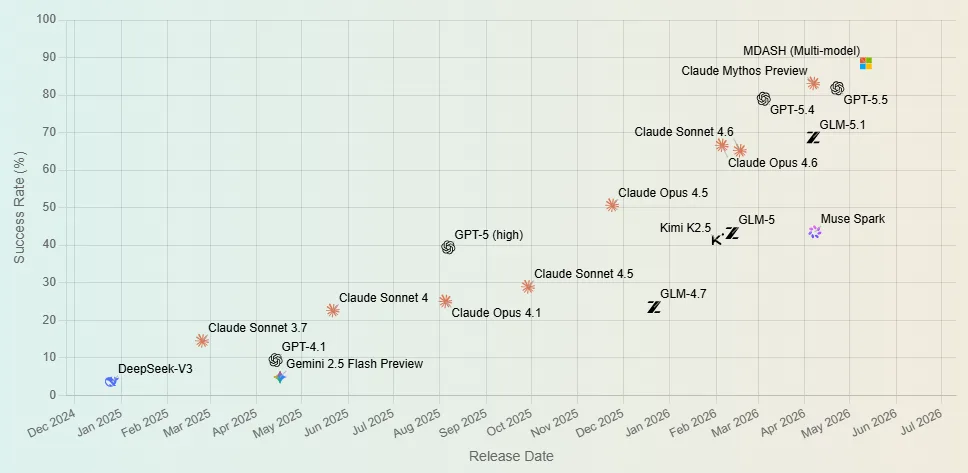
Microsoft's multi-agent AI system tops Anthropic's Mythos on cybersecurity benchmark
Microsoft's new MDASH (multi-model agentic scanning harness) scored 88.45% on the CyberGym cybersecurity benchmark, surpassing single-model systems including Anthropic's Mythos and OpenAI's GPT-5.5. It runs more than 100 specialized AI agents across multiple models in a staged pipeline that finds, debates and proves vulnerabilities with proof-of-concept exploits. Microsoft used MDASH to disclose 16 new Windows vulnerabilities, including four critical remote code execution flaws fixed in May's Patch Tuesday.
read on external site →2026-05-13 // article
Placed by Pascal

Two Weeks After "Context Is the New Code" at AIE London: I Did Not See This Coming
Patrick Debois reflects on the unexpected viral pull of his 'Context Is the New Code' keynote: 60k+ views, community translations and extensions of the Context Development Lifecycle (CDLC) within two weeks. Practitioners expanded the model from 4 to 7 stages and introduced ideas like 'context debt'. His takeaway: the diversity of framings is doing work a single talk cannot.
read on external site →2026-05-03 // article
Placed by Pascal
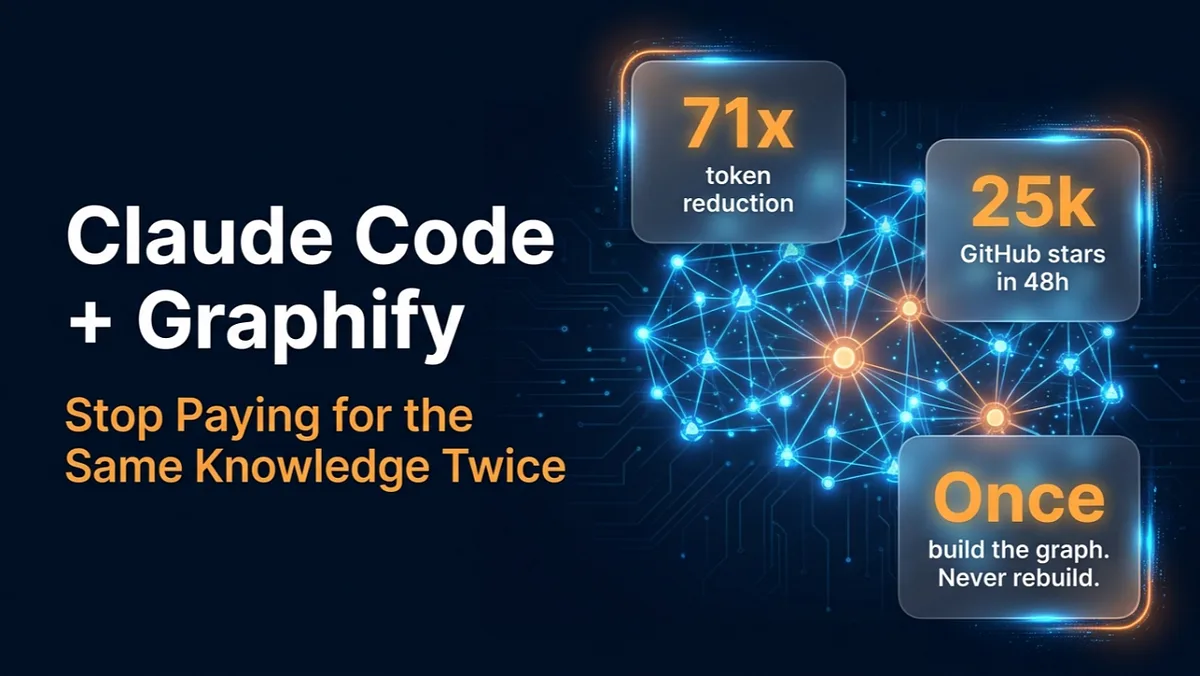
Graphify: The Knowledge Graph That Ends Your Codebase's Token Tax
Graphify is an open-source tool that builds explicit knowledge graphs of codebases to cut token consumption in LLM queries. Instead of retrieving semantically similar snippets via RAG, it parses code once into a structured graph using AST extraction (tree-sitter), local transcription and semantic analysis. Relationships are tagged by confidence (EXTRACTED, INFERRED, AMBIGUOUS) and the pipeline runs in three privacy-bounded passes, keeping source code fully local. Headline benchmarks claim a 71.5× token reduction; real-world testing shows 7-8% savings on typical coding sessions, scaling on large mixed-media repos.
read on external site →